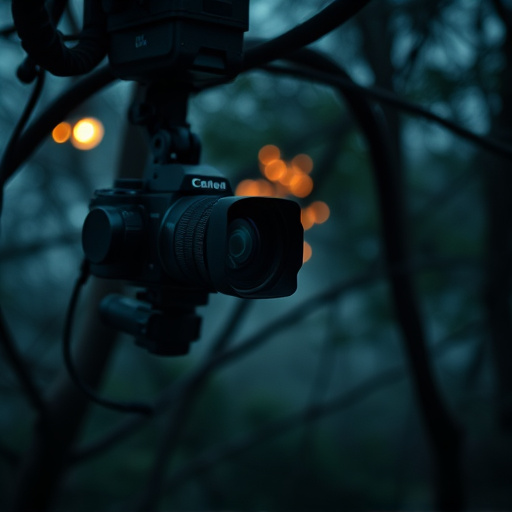
Motion-activated camera false alarm prevention involves careful sensor calibration, strategic lighting, and advanced technology. Regular testing, sensitivity adjustments, and object recognition reduce alerts from pets, wind, shadows. Smart lighting mimics human movement, minimizing notifications in complex spaces. Fine-tuning settings, regular maintenance enhance system efficiency for genuine threat detection.
“Unveiling hidden surveillance: Exploring the science behind disguised camera identification through light testing. In today’s world, motion-activated cameras are prevalent, but they often face the challenge of false alarms. This article delves into an innovative approach to combat this issue by examining the relationship between lights and camera technology. We’ll uncover how specific lighting patterns can aid in identifying hidden cameras while providing practical strategies for preventing unwanted alerts. By understanding these methods, homeowners and businesses can enhance privacy and security.”
- Understanding Motion-Activated Cameras and False Alarms
- The Role of Lights in Camera Identification
- Testing Light Patterns for Disguised Cameras
- Preventing Unwanted Alerts with Smart Lighting
- Effective Strategies to Minimize False Alarm Prevention
Understanding Motion-Activated Cameras and False Alarms
Motion-activated cameras, while offering enhanced security, can also be prone to false alarms, a common issue that plagues many homeowners and business owners alike. These sensors detect motion within a defined range and trigger camera recording or alerts, but they aren’t always accurate, leading to unnecessary worry and potential privacy concerns. False alarms can occur due to various factors: pets moving, wind blowing, or even shadows cast by passing vehicles or people.
To prevent these false alarms and ensure the camera’s effectiveness, it’s essential to calibrate and position the sensor carefully. This involves adjusting sensitivity levels and ensuring the camera’s field of view doesn’t capture unrelated motion sources. Regular maintenance and testing can also help fine-tune the system, allowing for a better understanding of its capabilities and limitations in detecting real threats or suspicious activities.
The Role of Lights in Camera Identification
Lights play a pivotal role in enhancing camera identification and reducing false alarm prevention. By utilizing strategic lighting, security systems can significantly improve their accuracy and efficiency. Motion-activated cameras, for instance, rely on light as a key trigger; when an object or person moves within a certain luminescent range, the camera is activated, minimizing false triggers caused by ambient noise or non-threatening movements. This simple yet effective mechanism not only conserves resources but also ensures that surveillance efforts are directed towards genuine security concerns.
Moreover, lights serve as a distinct feature for identifying cameras in complex environments. Different types of lighting—natural, artificial, or strategically placed LED lights—can help identify specific camera locations, making it easier to monitor and maintain the system. This visual clarity is particularly beneficial in bustling settings where multiple cameras might be present, enabling security personnel to quickly differentiate between genuine alerts and potential false alarms.
Testing Light Patterns for Disguised Cameras
Testing light patterns is a sophisticated method to identify and prevent hidden cameras, especially in public spaces. By analyzing the unique flicker rates and intensity variations of lights, security experts can detect motion-activated cameras that might be trying to avoid detection. This approach is particularly effective in preventing false alarm scenarios where regular lighting changes could mistakenly trigger alerts.
The process involves studying the natural light cycles in an area and then comparing them with any artificial lighting patterns. Any discrepancies or irregular fluctuations could indicate the presence of a disguised camera, ensuring that potential threats are identified without causing unnecessary panic. This technique is a game-changer in enhancing security measures, especially in high-traffic areas where motion-activated cameras are commonly used for surveillance.
Preventing Unwanted Alerts with Smart Lighting
One of the biggest challenges with motion-activated camera systems is preventing false alerts, which can lead to unnecessary stress and wasted time. A clever solution lies in the integration of smart lighting technology. By utilizing lights that can be programmed to mimic human movement patterns, these systems learn what constitutes normal behavior within a space. This approach significantly reduces false alarms caused by pets, passing shadows, or unintentional movements, ensuring that alerts are only triggered when actual activity occurs.
For example, smart bulbs and fixtures can be set up to turn on and off at specific intervals, follow a randomization algorithm to mimic human movement, or even respond to motion sensors while adjusting brightness and color temperatures. This sophisticated lighting design not only enhances security but also creates an environment where camera systems operate more efficiently, providing peace of mind for users.
Effective Strategies to Minimize False Alarm Prevention
To minimize false alarm prevention in motion-activated camera systems, several effective strategies can be employed. Firstly, ensure that the camera’s sensitivity settings are fine-tuned to avoid triggering unnecessarily. This involves adjusting the motion detection threshold and area of coverage to match your specific environment. For instance, reducing the sensitivity for areas with consistent background motion, like near ceiling fans or in crowded spaces, can significantly cut down false alarms.
Additionally, utilizing advanced features like object recognition technology can help differentiate between humans, animals, and other moving objects. This reduces false triggers from harmless movements. Regular maintenance and testing of the camera’s components, including sensors and circuitry, are also crucial. Keeping them clean and well-functioning prevents issues that could lead to inaccurate readings. Implementing a smart notification system that distinguishes between alerts based on severity can further enhance operational efficiency.
Disguised camera identification using light patterns offers a promising solution to combat motion-activated camera false alarms. By understanding the role of lights and employing smart lighting strategies, we can significantly minimize unwanted alerts. Through careful testing and implementation of effective techniques, such as analyzing unique light patterns and utilizing advanced lighting controls, it’s possible to enhance security while reducing false alarm prevention. These measures ensure that surveillance systems operate efficiently without unnecessary disruptions, making them a crucial aspect of modern security solutions.