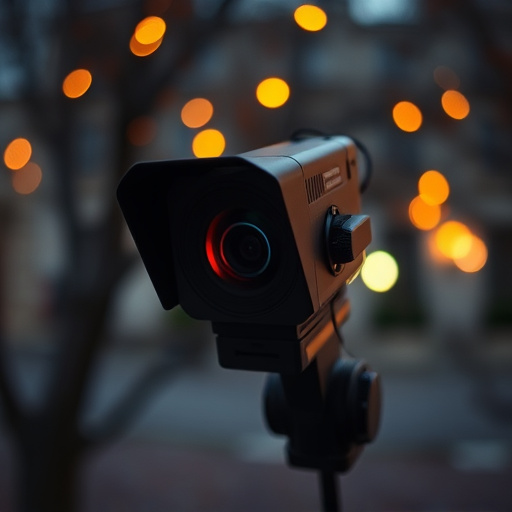
Infrared camera technology, with its motion detection capabilities, offers enhanced security by reducing energy consumption and false alarms. These cameras activate upon detecting movement changes in temperature or light, sending notifications for significant activity. Setting up involves configuring access and motion detection settings while balancing sensitivity to prevent false alerts. Regular maintenance, updates, and calibrations ensure optimal performance, combining various detection methods for improved accuracy in motion-activated camera systems, ultimately enhancing security measures.
Infrared camera detector apps offer a powerful tool for enhancing security with motion-activated capabilities. This comprehensive guide navigates the intricacies of infrared technology, walking you through app setup, optimizing performance, and preventing false alarms. Learn how to harness the potential of these devices to monitor your surroundings effectively, ensuring peace of mind in today’s digital era. Discover strategies for successful implementation and maintain optimal app performance to minimize Motion Activated Camera false alarm prevention.
- Understanding Motion Detection Technology
- Setting Up Your Infrared Camera Detector App
- Effective False Alarm Prevention Strategies
- Optimizing App Performance and Maintenance
Understanding Motion Detection Technology
Infrared camera technology relies on motion detection to capture and record activities, making it a valuable tool for security and surveillance applications. Motion detection works by analyzing changes in temperature or light levels within a defined field of view. When an object moves into this area, the infrared sensor detects the change, triggering the camera to capture an image or start recording video. This technology is particularly useful for home and business security systems as it can activate cameras only when movement is detected, saving energy and storage space.
One of the key benefits of motion-activated cameras is false alarm prevention. Traditional cameras often record constantly, leading to a significant amount of uneventful footage that can be time-consuming to review. Motion detection ensures that recordings are generated only when something moves, significantly reducing unnecessary data and minimizing false alarms. This feature is crucial for maintaining efficient security systems and ensuring that alerts are genuine.
Setting Up Your Infrared Camera Detector App
Setting up your infrared camera detector app is a straightforward process designed to help you maximize its potential for secure monitoring. Begin by ensuring your device’s camera access is enabled, as this is crucial for the app to capture and analyze infrared images. Next, familiarize yourself with the app’s settings, focusing on motion detection parameters. Adjusting sensitivity levels is key to prevent false alarms; set it to detect subtle movements to avoid unnecessary alerts. Consider implementing motion-activated triggers to further refine your security measures. These features allow you to receive notifications only when significant activity occurs, significantly reducing the volume of alerts.
Once configured, test your setup in various lighting conditions. Infrared cameras excel in low-light environments, so simulate different scenarios to ensure optimal performance. Regularly review and tweak settings as needed, especially after changes in your surroundings or security requirements. Effective false alarm prevention is a balance between sensitivity and specificity, so stay vigilant and adapt accordingly.
Effective False Alarm Prevention Strategies
Preventing false alarms is essential for ensuring the reliability and efficiency of motion-activated camera systems. One effective strategy is to fine-tune the sensitivity settings, adjusting them according to your environment. Natural movements like wind or pets can trigger alerts; therefore, customizing the detector’s response to these factors is key. Regular maintenance and cleaning are also vital; dust and debris can affect performance, so keeping the sensor clear enhances accuracy.
Additionally, utilizing multiple detection methods can significantly reduce false alarms. Many apps offer advanced features like heat signature analysis or object recognition, which can differentiate between living beings and inanimate objects. Combining these techniques ensures that only genuine movements are captured, providing a more secure and reliable surveillance experience.
Optimizing App Performance and Maintenance
To optimize your infrared camera detector app’s performance, regularly update it and keep your device’s software up-to-date. This ensures the app stays efficient and secure. A well-maintained app can significantly reduce false alarm triggers caused by environmental factors or ordinary movements, enhancing its overall reliability.
Focus on calibrating the motion detection settings to avoid unnecessary alerts. Many apps offer customization options for sensitivity levels and trigger zones, allowing you to fine-tune them according to your environment. Regularly reviewing and adjusting these settings can prevent false alarms, ensuring a smoother experience.
Infrared camera detector apps offer a powerful tool for enhancing security with motion-activated capabilities. By understanding the technology, setting up your app effectively, and implementing strategies to prevent false alarms, you can ensure optimal performance. Regular maintenance is key to keeping your system reliable and secure. With these steps, you’re well-equipped to harness the benefits of motion detection while minimising potential disruptions.